This project utilises EfficientNetV21 as the feature extraction backbone and is complemented with a custom loss function inspired from Hard negative examples are hard, but useful2, LSC+. This project also utilises an extended version of the conventional PK sampling technique, PKFM.
All of these choices were made according to existing research and reading materials. This project was made to address known limitations and challenges of utilising deep learning models in offline signature verification.
Challenges in this domain
High intra-class variability
High inter-class similarity
Poor computational efficiency
Imbalance of real-world training data
The primary objective of this project is to improve intra-class generalisability while ensuring skilled forgeries’ discriminatory ability remains strong.
Out of Scope
Digitally drawn signatures
Electronic Signatures
Non-Latin languages
Accuracy when poor quality images are used
Writer dependent verification
Signature extraction
Oversight
Like all models placed in critical systems, they can sometimes make potentially disastrous mistakes and require human oversight.
Problems
To the best of my knowledge, albeit admittedly limited, offline signature verification are still primarily driven by manual work. (I was informed of this during my internship)
Unlike machines, humans can’t operate on high volumes of documents at high speed over a long, continuous period of time. Since signatures are still used in important documents, particularly in financial, legal, and administrative contexts, errors are very often unacceptable.
Deep learning approaches often struggle with high intra-class variability and highly similar skilled forgeries.
To deal with this, a lot of approaches cheat by implementing additional methods or models on top of their existing deep learning architecture and pipeline.
This is not to fault the authors, but I do believe that there are still more optimisation that we have yet to implement.
If developers aren’t careful enough, OSV models that utilise the conventional triplet loss approach 3 can suffer from poor optimisation, wasting resources; most of the time 2, the positive samples are already closer to the anchors than the negatives, leading to over-optimisation of anchor-positive pairs and causing poor generalisability towards intra-class signatures.
Approach
Pre-Processing Images
TLDR
RGB format is unnecessary
Binary format was opted for and it was achieved with Otsu’s thresholding
What we primarily want from the signature images are the strokes; thus, colours don’t play much of a role.
RGB format would only provide irrelevant colour information, increasing computation power and possibly interfering with the model’s ability to extract relevant feature embeddings.
On the contrary, grasyscale or binary format forces the model to focus solely on the strokes of the signatures by enhancing the contrast between the foreground and the background.
It also minimises paper artefacts, reducing noise in each image.
Although greyscale format reduces unnecessary information, it may make the foreground less discernible from the background.
To make the strokes pop out, I went with Otsu’s binarisation technique 4.
This techinque automatically determines the optimal global threshold needed to convert the grayscale image into a binary image.
Unfortunately, I couldn’t solve the issue of lacking signature images that plagues this domain;
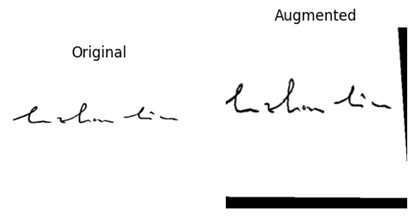
however, this glaring issue may be mitigated by artificially boosting the number of training samples with data augmentation - resizing, rotation, scaling, and translation.
Training a CNN model from scratch would require tens of thousands to millions of examples to reach a satisfactory accuracy.
It would also require extensive compute power, something that I don’t possess.
Fortunately, I leverage existing state-of-the-art models via transfer learning to speed up the training process while ensuring satisfactory accuracy.
After doing some reading 17, EfficientNetV2 was the top pick. The model improved upon EfficientNetV1, balancing computation efficiency with performance - this model performs 11× faster while being 6.8× smaller.
Amongst the three available EfficientNetV2 variants, the mid-size variant offers the strongest balance between computation cost and performance; the largest variant contains more than twice the parameters of the mid-variant, yet it yielded only marginally better performance on ImageNet 1.
Models
Top-1 Accuracy (%)
Parameters
EfficientNetV2-S
83.9
22M
EfficientNetV2-M
85.1
54M
EfficientNetV2-L
85.7
120M
I removed the classification head and replaced it with project layers that reduce the feature vectors to 256 dimensions.
Why 256?
Short answer:
It’s a nice middle ground
Long answer:
A 256-dimension offers a rich yet efficient feature space for encoding patterns.
Since signature images are relatively simple, there is no need for a higher level of dimensions, as a higher dimension can lead to redundancy.
Loss Function
Triplet Loss
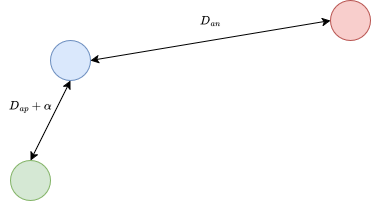
The conventional loss function is as follows:
There are three nodes, collectively called a triplet, comprising an anchor, a genuine signature (positive), and a forged signature or an inter-class signature (negative).
The goal is to pull similar images (anchor and positive) closer while pushing dissimilar images (anchor and negative) away.
This is achieved by ensuring that the anchor is slower to the positive than it is to the negative by at least a margin (α)
Dap+α<Dan
However, the triplets generated may have already satisfied this condition, slowing down convergence if these triplets are still passed through the network.
To address this, the authors behind Hard negative examples are hard, but useful2 introduced online triplet mining to dynamically compute the triplets as training progresses.
They achieved this by constructing large mini-batches that contain multiple examples per identity, selecting anchor-positive pairs from within the batch, and then dynamically identifying negatives.
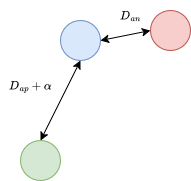
For hard triplets, the negative is chosen as the closest impostor to the anchor.
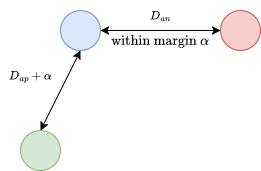
For semi-hard triplets, the negative is farther than the positive but still lies within the margin.
Hard Triplet
Semi Hard Triplet
This paper is particularly important as it shows that this loss function is ideal for verification problems involving negative samples.
Their online mining approach also led to countless inspirations down the line.
I decided to implement this loss function in conjunction to the custom loss function that I will be implementing.
LSC+
This loss function is an extension of Hard negative examples are hard, but useful2
The authors of Hard negative examples are hard, but useful noticed that the conventional triplet loss function exhibits a couple of issues: poor optimisation and gradient entanglement.
They proposed to simply ignore anchor-positive pairs and easy negatives to focus solely on penalising hard negatives.
Theoretically, this approach works well in the domain of offline signature verification; the high intra-class variation requires the model to have some degree of generalisability while maintaining a robust discriminatory ability.
However, there is a subtle failure if I just drag-and-drop their implementation.
By removing the explicit constraint on anchor-positive similarity, the model is no longer encouraged to keep genuine signatures close together; over time, genuine embeddings can drift apart.
In practice, this can lead to a higher count of false negatives: a genuine signature sampled later may fall outside of the verification threshold, although it belongs to the same user.
To mitigate this, I introduced a lightweight positive constraint that softly enforces intra-class cohesion while retaining the hard-negative emphasis. This lets me utilise the benefits of the existing loss function while preventing genuine signatures from drifting too far apart.
LSC+=LSC(Sap,San)+μLpull
Where:
LSC is Selectively Contrastive Triplet Loss
Lpull is Positive Pull Regularisation
μ is a hyperparameter weighing the positive pull
The LSC handles the inter-class separation, whereby it switches behaviour according to the difficulty of anchor-negative pairs.
Sap=faTfp is cosine similarity between anchor and positive
San=faTFn is cosine similarity between anchor and negative
λ is weighting factor for hard negatives
This is more computationally efficient compared to the standard triplet loss implementation.
If a negative sample is found to be closer to the anchor than the positive sample (a hard negative), the loss function switches and pushes the negative sample away from the anchor in the hypersphere; the negative sample will receive exponentially larger weighting in the loss function.
In contrast, when a negative sample is already sufficiently distant (an easy negative), the model does not incur any penalty and simply ignores it by switching to smooth, self-normalising log-softmax, receiving vanishingly small weights.
The Lpull is defined as follows:
Lpull={m−Sap,0,ifSap<motherwise
Where:
m is margin
The margin is important to stop the model from over-optimising positives.
If a margin is not included, the model may ignore its initial purpose to maximise negative distances.
This subsequently leads to the collapse of the embedding space.
Once the anchor-positive similarity exceeds the threshold, the gradient from the positive pull becomes 0, allowing the model to focus on separating negatives.
Dataset and Sampling
The dataset was split based on signer identity rather than individual images, ensuring that no signature from a given signer appeared in both training and testing sets.
This method of splitting prevents the leakage of testing images into training and enforces subject-independent evaluation.
In standard PK sampling, a batch is formed by selecting P signers and K signatures per signer, controlling the balance between inter-class and intra-class samples; however, it lacks the control over hard negatives and easy negatives. PKFM mapping introduces two additional parameters, F and M, which regulates the number of intra-class and inter-class negatives, respectively. Increasing F raises the likelihood of encountering hard negatives (skilled forgeries), while increasing M introduces more easy negatives (inter-class negatives), thereby enriching the diversity of each batch.
The resulting batch size is:
Batch Size=P×(K+F+M)
From a practical standpoint, offline signature datasets are often imbalanced, with some signers contributing disproportionately more samples. If not handled with care, some signers experience stronger verification compared to signers with fewer signatures. PKFM mitigates this issue by balancing the dataset at the batch level.
Training
I implemented key features for training such as:
Early Stopping
Monitors validation loss and automatically halts training if no significant improvement is observed over a set number of epochs, preventing overfitting
Learning Rate Scheduling
Manages the adjustment of the learning rate throughout training to optimise convergence.
Checkpointing
Automatically saves model snapshots - weights, and optimizer state - at key points when a new best validation loss is achieved, ensuring progress can be restored and the best model recovered.
Device Management:
Handles moving data and the model to the GPU for accelerated computation.
To ensure a fair comparison of all the models, the configurations for the scheduler, optimiser and training, as well as the model, were kept mostly similar.
The margin hyperparameter was fixed at 0.5 across all loss functions, ensuring that the differences in performance were attributable to the loss formulation rather than margin selection.
The hyperparameters were also selected based on the recommended starting points. (Can’t afford extensive hyperparameter fine-tuning at the moment.)
For my run, I implemented a linear warm-up for the first 5 epochs, gradually increasing the learning rate from 0.0001 to 0.001, followed by a cosine decay learning rate schedule that smoothly reduces the rate to 1×10⁻⁶. This method stabilises early training and enables fine-grained convergence .
Results
Hard Triplet Mining
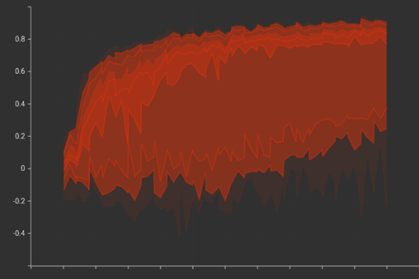
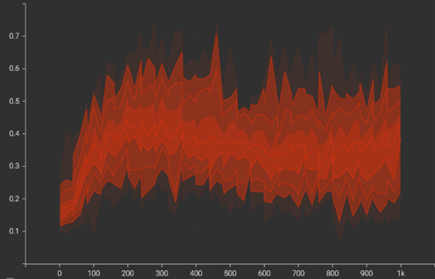
Utilising batch hard mining, the model demonstrated the ability to separate negative samples from the positives.
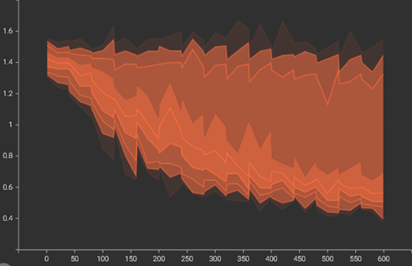
At the commencement of training, the mean of Attraction Term was higher than the Repulsion Term.
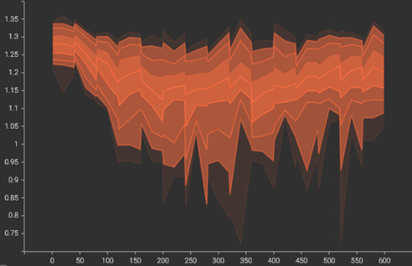
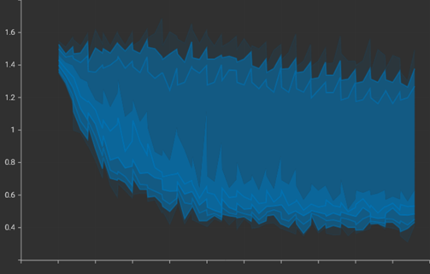
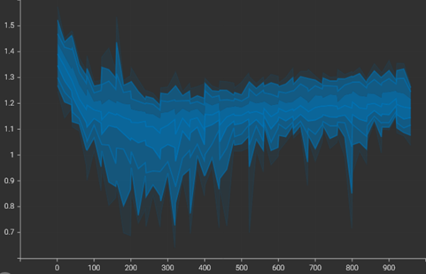
By the end of the training process, the model successfully minimised the Attraction Term from approximately 1.4to0.7, while the Repulsion Term was consistently concentrated between 1.15and1.25.
Attraction Term
Repulsion Term
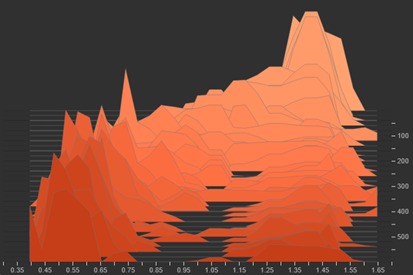
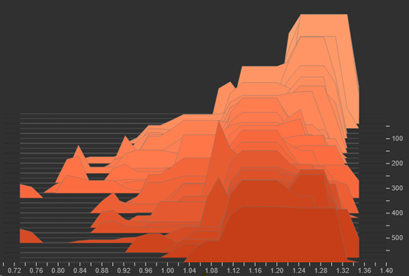
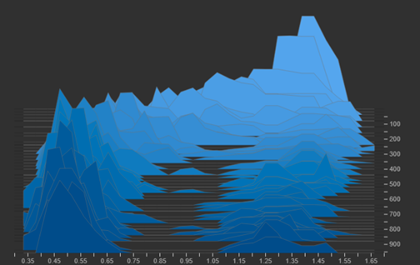
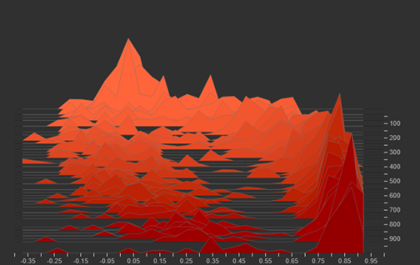
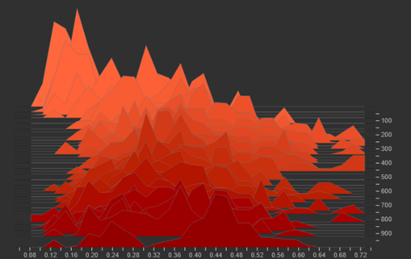
The histograms further illustrated these favourable dynamics; the distribution of the Repulsion Term remained concentrated on the right side of the axis, while the Attrasction Term distribution successfully shifted to the left.
This increasing spatial separation the two density peaks provides clear visual evidence that the model learnt to distinguish between genuine signatures and forgeries, effectively widening the margin.
Attraction Term
Repulsion Term
When evaluated on the withheld test set, the model yielded a classification accuracy of 78.23%.
This indicates that the system correctly identified signatures in approximately 78 out of every 100 instances, demonstrating acceptable performance for this specific evaluation context.
The relatively high anchor-positive cosine similarity alongside a low anchor-negative cosine similarity confirms the model’s capacity to discern forgeries from genuine signatures.
Furthermore, an analysis across the entire threshold range identified 0.667 as the optimal threshold, at which point the misclassification rate was 21.77%.
Category
Metric / Score
Result
Performance
Accuracy
78.23%
True Positive Rate
78.20%
False Positive Rate
21.80%
AUC
0.8607
EER
21.77%
Similarity Score
Positive Score
0.7784
Negative Score
0.3611
Hard mining produced smooth and globally consistent boundaries, as illustrated by the clean ROC curve.
The curve yields an AUC of 0.8067, suggesting that the embedding space learnt under hard triplet mining maintains a strong degree of class separability across varying thresholds.
However, the confusion matrix reveals a more detailed picture; even at the optimal threshold, False Acceptance Rate remains relatively high (≈21.8%).
This indicates that a significant portion of skilled forgeries still resides within the acceptance margin of the genuine clusters.
These results demonstrate that while hard-negative mining successfully increases inter-class separation for the hardest violations, it does not guarantee robust generalisation across all variations of the same signature.
Consequently, hard triplet mining alone may not suffice for real-world signature verification, necessitating further refinement or the integration of complementary strategies.
Semi Hard Triplet Mining
Under the batch semi-hard mining strategy, the model demonstrated a capacity to separate negative samples from positive. At the start of training, the Attraction and Repulsion Terms exhibited similar means, indicating an initial lack of discriminative structure in the embedding space. By the end of training, the mean Attraction Term was successfully reduced from 1.1 to ≈0.7, while the Repulsion Term stabilised between 1.1and1.2.
Attraction Term
Repulsion Term
Visualisations via histograms confirmed these desired changes. The distribution of the Attraction term shifted to the left, indicating tightening clusters. Although the Repulsion Term appeared to shift towards the centre rather than staying on the right, this is a visual noise caused by the disproportionately high distances recorded during the start of the training. Nonetheless, the Repulsion Term shifted to a stable range, ensuring a consistent, clearly defined margin.
Attraction Term
Repulsion Term
Upon evaluation with the test set, the model achieved a Recall rate of 82.10% and a False Positive Rate (FPR) of 17.90%.
The high positive similarity scores and mid-range negative scores further validated the model’s ability to cluster positives and their variants.
Finally, at the optimal decision threshold of 0.777, the model yielded a Total Error Rate of 17.88%.
Category
Metric / Score
Result
Performance
Accuracy
82.12%
True Positive Rate
82.10%
False Positive Rate
17.90%
AUC
0.9071
EER
17.88%
Similarity Score
Positive Score
0.8639
Negative Score
0.4967
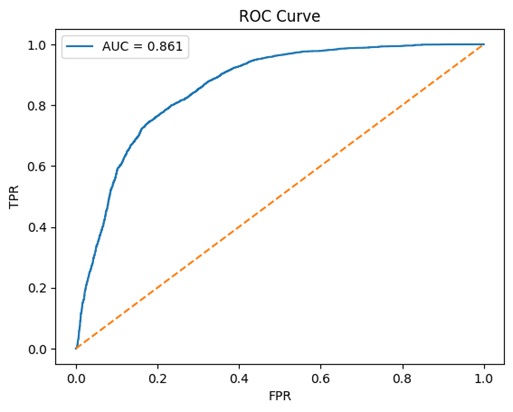
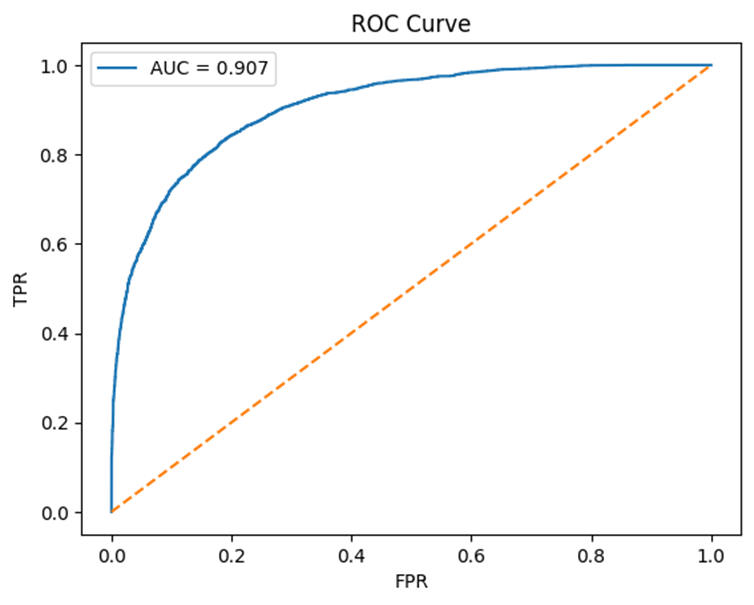
The ROC curve is smooth and clean with a high AUC score of 0.907.
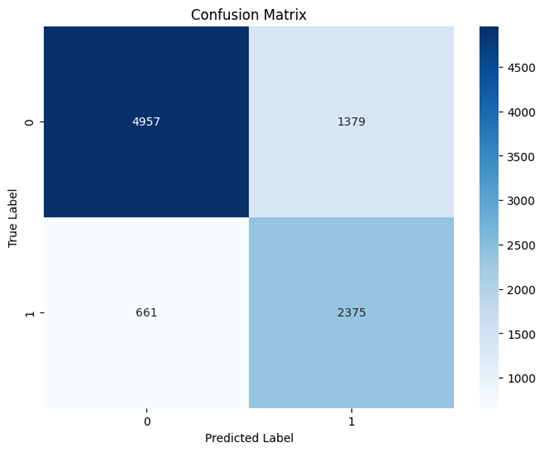
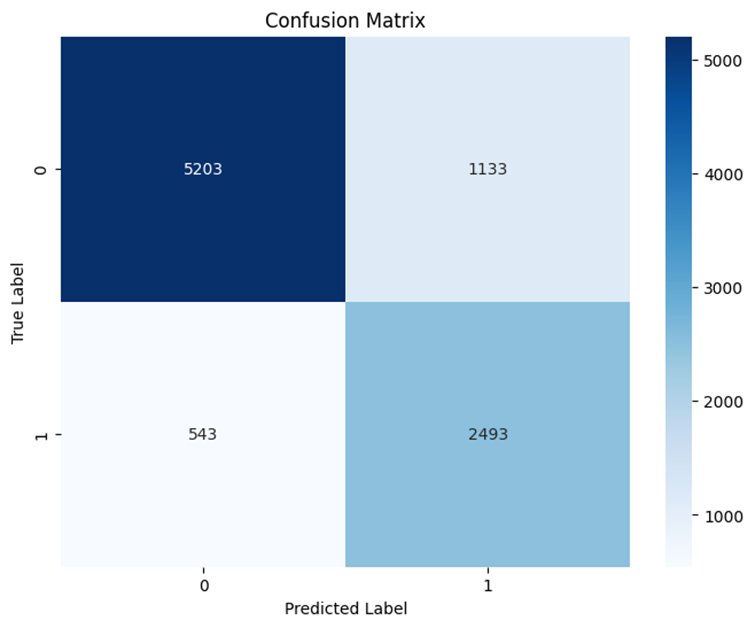
While the confusion matrix still indicates some leakage, especially skilled forgeries that manage to bypass the threshold, the overall pattern suggests that semi-hard mining produces a balanced embedding space.
This strategy did not create a model that is overly sensitive to extreme outliers but rather one that focuses on samples that lie within the margin but not yet properly separated.
ROC Curve
Confusion Matrix
LSC+
Unlike standard triplet loss, the lLSC+ loss function utilises cosine similarity, effectively inverting the traditional distance-based intuition. In this architecture, the repulsion mechanism pushes hard negatives toward lower similarity values, while the explicit positive pull ensures that the attraction term increases, but only up to the specified margin. This prevents the cluster from collapsing into a single point while ensuring that positive clusters are not too sparse.
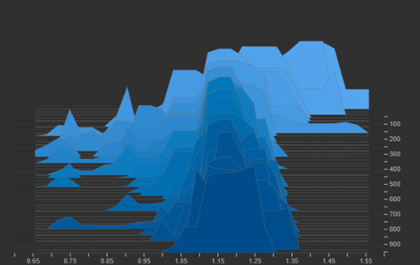
During training, the model exhibited the desired behaviour: a rising Attraction Term and a diminishing Repulsion Term. The histograms for the Repulsion Term were notably spread out, indicating that the model is complying with the intended behaviour of ignoring easy forgeries and aggressively pushing hard negatives.
Attraction Term
Repulsion Term
Attraction Term
Repulsion Term
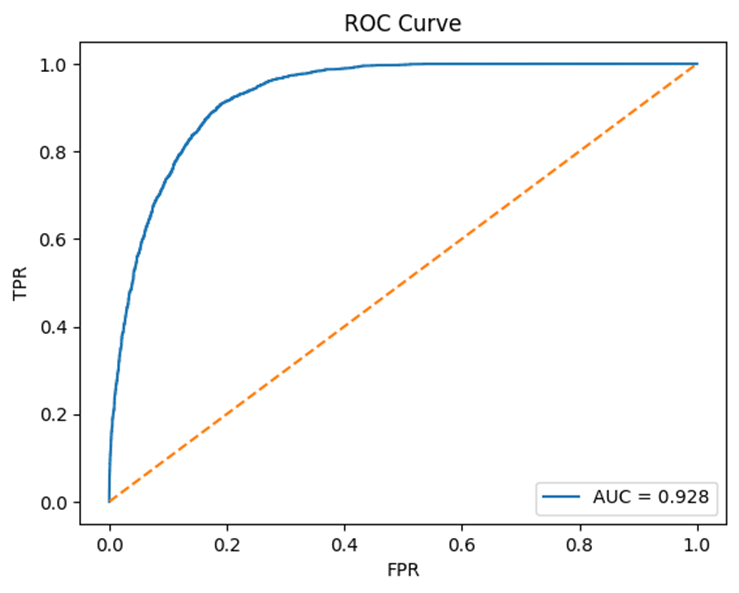
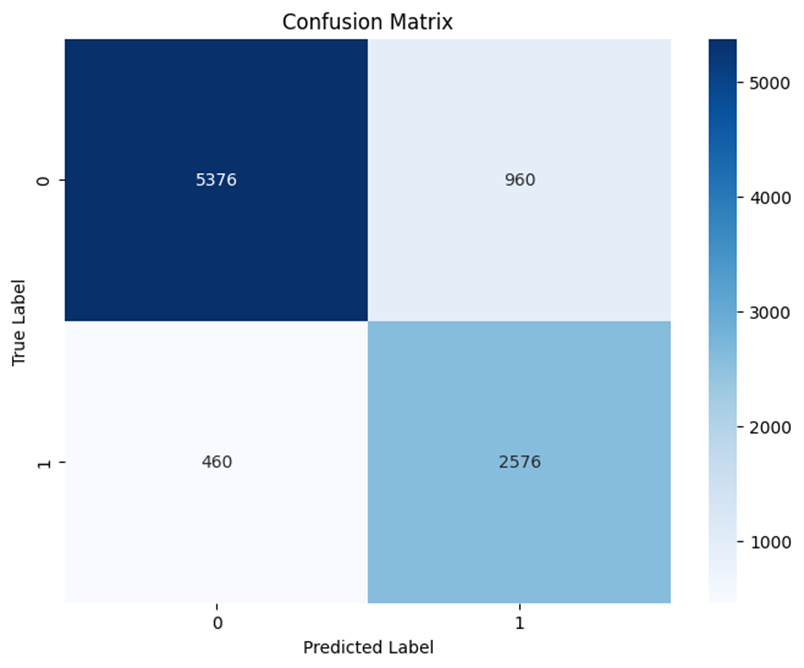
On the test set, the model yielded the most promising results, achieving a recall of 84.80%, a False Positive Rate of 15.20%, and an overall accuracy of 84.85%. At an optimal threshold of 0.725, a respectable Equal Error Rate (EER) of 15.15% was recorded.
Category
Metric / Score
Result
Performance
Accuracy
84.85%
True Positive Rate
84.80%
False Positive Rate
15.20%
AUC
0.9284
EER
15.15%
Similarity Score
Positive Score
0.8444
Negative Score
0.3644
These metrics, alongside a superior AUC, point to a more discriminative embedding space than the triplet-based variants.
The ROC curve shows smooth global separation, while the confusion matrix confirms consistent rejection of forgeries.
ROC Curve
Confusion Matrix
Performance and Evaluation
Quantitative Results
Amongst the three loss function, LSC+ performed the best.
While some overlap persists, it is miniimsed compared to the other strategies.
This is likely to due its design of ignoring easy negatives, leading to closer, yet acceptable, distances.
At the optimal threshold, this model yielded the lowest false acceptance of forgeries
Metric / Score
LSC+ (0.725)
Semi-Hard Triplets (0.777)
Hard Triplet (0.667)
TPR
84.8%
82.1%
78.20%
FPR
15.2%
17.9%
21.80%
AUC
0.9284
0.9071
0.8607
Positive Score
0.8444
0.8639
0.7784
Negative Score
0.3644
0.4967
0.3611
Both positive and negative scores of LSC+ fall between those of semi hard (0.8639) and hard mining (0.7784).
While initially counterintuitive, this highlights a critial point: a hihger positive similarity doesn ot necessarily translate to better verification.
What matters is the margin between potsitive and negative distributions is what a model should prioritise.
LSC+ achieves this by moderately enforcing intra-class compactness while consistently pushing hard negatives, creating more balanced clusters
The ability to decouple anchor-positive from anchor-negative pairs allows LSC+ to receive independent gradient signals, ensuring continuous, informative updates regardless of triplet sampling quality.
In contrast, the coupling effect in hard and semi-hard triplet mining causes imbalance gradients, leading to overlap.
The smoother gradient dynamics of LSC+ resulted in a more separable embedding space, improving discriminability across thresholds.
The operating threshold for LSC+ falls between semi-hard and hard mining, reflecting a more balanced embedding distribution. By comparison, the lower threshold required by hard triplet ming reflects its tendency to over-compress positives, which shifts the negative distribution closer and increases false acceptance of forgeries.
Overall, the results indicate that LSC+ produces more stable, generalizable, and discriminative embeddings. Despite not achieving the highest raw positive score, its improved separation of positive and negative distributions leads to superior AUC, TPR, FPR, and accuracy. This robustness arises from its decoupling of anchor-positive and anchor-negative contributions, which ensures continuous informative gradients and balanced embedding clusters.
Embedding Behaviour and Analysis
Across all loss functions, the models exhibited the desired behaviour: a leftward shift of anchor-positive distance and a lingering anchor-negative distance on the right
However, upon scrutiny, some nuances can be observed; there exist overlapping between the attraction and repulsion terms.
The extent of this overlap and resulting stability varies significantly by strategy.
Hard triplet mining showed the most severe overlap between positive and negative distributions.
This resulted in a higher rate of false predictions, even at the model’s optimal performance threshold.
This aligned with the observation made by the authors of FaceNet 3, who noted that an over-focus on hard triplets often causes model collapse.
The excessive penalty on hard negatives forced the model to over-compress anchor-positive pairs to compensate.
This over-fitting to specific hard samples reduced the generalisability of the model to unseen signatures from the same signer.
The imbalanced focus on hard negatives resulted in inconsistent separation of anchor-negative pairs, leaving some negatives closer to the anchor than desired.
Semi hard triplet mining exhibited less drastic overlap.
This is likely due to its enforcement of separations based on Dap+α rather than purely focusing on the hardest violations.
However, this strategy can backfire when the threshold for forgeries falls within the Dap+α range, where false predictions remain relatively high.
Notably, its reduced emphasis on hard triplets leads to slightly more dispersed anchor-positive pairs, increasing robustness to intra-class variation by allowing natural differences in genuine signatures.
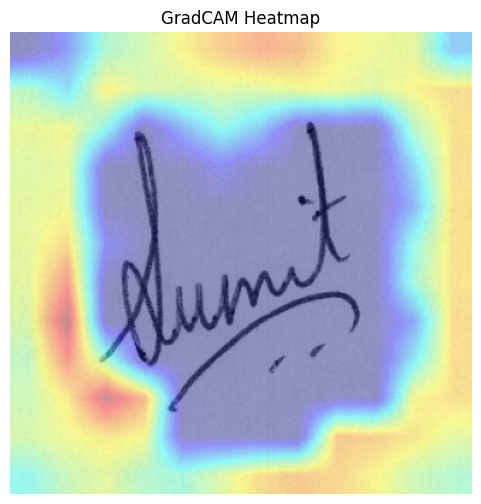
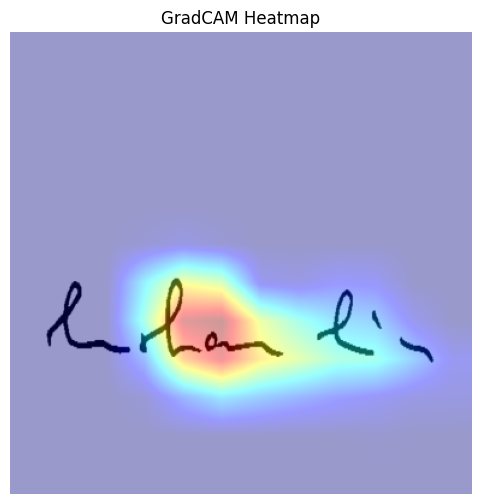
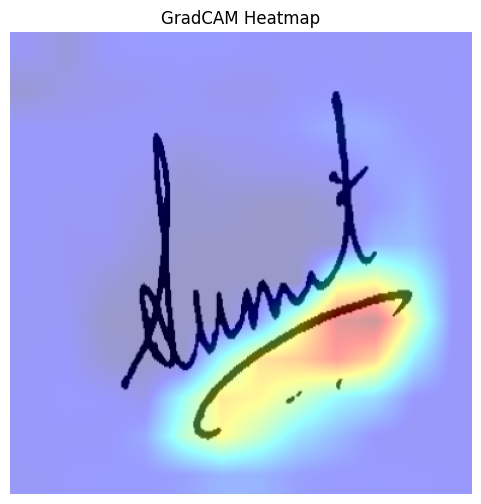
I will only highlight weird, edge cases since they’re the most interesting.
GradCAM is designed with classification models in mind, so the following interpretation may seem unorthodox.
Clever Hans Effect
As much as I wish it to be, my model is far from perfect. A significant issue present in a lot of models (both traditional and deep learning models) is the emergence of Clever Hans effect 8. In certain true positive instances, the model bypassed stroke characteristics in favour of spurious background features.
One plausible reason to this phenomenon is that the loss function forces discrimination in the embedding space, even when the model fails to discern meaningful biometric differences between certain pairs. As a result, the model resorted to minor background artefacts as proxy to manipulate distances, even if these artefacts have been largely mitigated via binarisation.
Fortunately, this is not consistent across every signature.
Signer 52
Signer 21
Implementation and Deployment
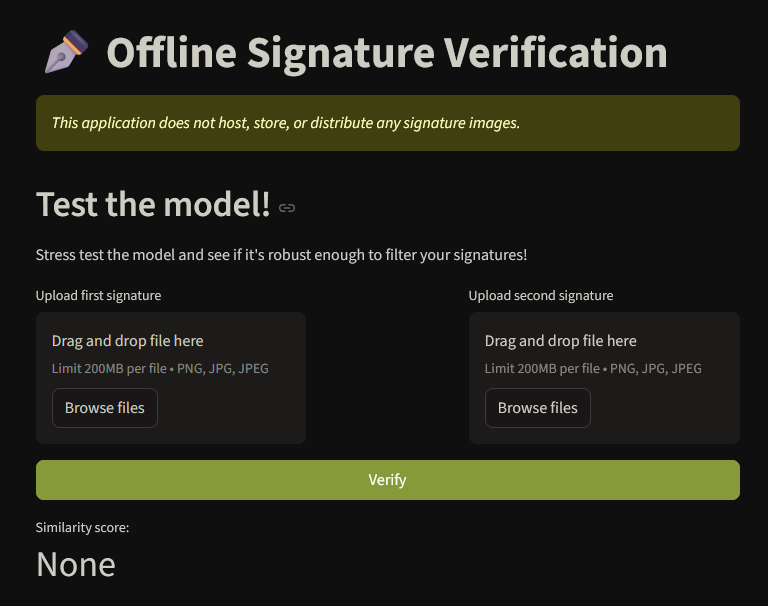
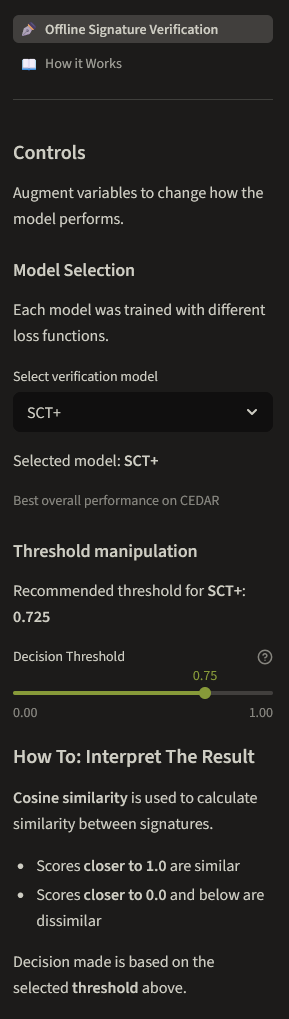
I’ve published the model onto hugging face and deployed it via streamlit.
I developed a backend API using Flask to handle verification requests.
A simple frontend is developed with React and a backend is developed using Flask microweb framework. I decided to implement a vector database using PostgreSQL with an open source plugin, pgvector9. Finally, the entire system was containerised using Docker 10 for easy deployment and testing.
The webpage allows the user to insert a signature image along with the user’s details, and upon verification, the similarity score, confidence score, Euclidean distance, and the distance score will be calculated and displayed.
Future Developments
Extensive hyperparameter fine-tuning It usually results in diminishing return
Implementation and deployment It’s deployed to Streamlit
Try different datasets I’m making my own test dataset